
 By
By 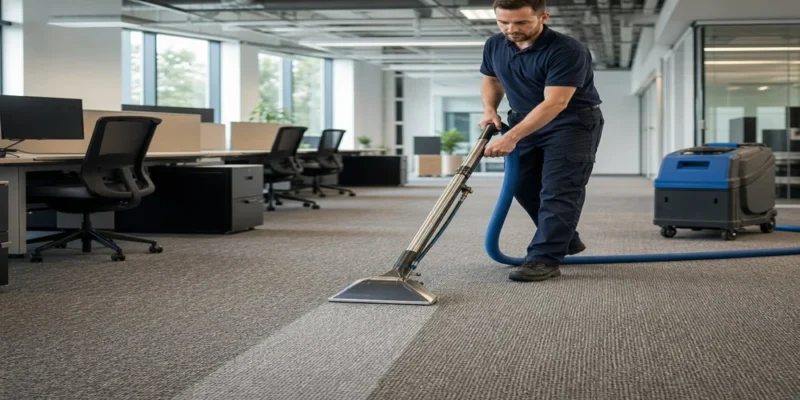
Professionally cleaned carpet in a business office
While carpets can enhance the ambience of a work space, making it quieter, softer and more comfortable, they are prone to accumulating soil that vacuuming alone will not remove. Dirt and grit get pushed down into the fibers by foot traffic, while spills and airborne particles cause the color and texture of the carpet to change over time. Professional carpet cleaning removes the accumulation of hidden dirt.
Why Regular Vacuuming Falls Short
Frequent vacuuming can pick up loose dirt, dust and debris from the surface. However, it can leave behind oils, sticky residues and ground-in dirt at the bottom of the carpet pile. This remaining contamination acts as a magnet for more dirt, leading to an unclean appearance even shortly after vacuuming.
Additionally, soil that has been ground into the carpet fibers can act as an abrasive (check out here). With the friction created by walking, these particles can cause matting and premature carpet wear. Periodic carpet cleaning removes dirt that cannot be removed with vacuuming alone.
What Else Can Carpet Cleaning Do For You?
Regular professional carpet cleaning keeps your carpet in good condition and improves the appearance of your business or facility. Soil removal can improve the color of the carpet, lift compressed carpet pile and create a better impression for guests visiting the reception area, offices, hallways or meeting rooms.
Some other benefits of professional carpet cleaning include:
- Reduction in stubborn spots and traffic-lane wear
- Odor removal
- Extended life of the carpet
- Improved uniformity of the carpet’s appearance
- Less stain recurrence
Preventative maintenance can also help avoid spreading dirt. Dirt and soil collected at entryways and high-traffic areas do not track into adjacent areas if the areas receive adequate treatment.
Selecting the Appropriate Carpet Cleaning Method
Every carpet and facility is unique. The fiber type, construction (there is a useful breakdown at https://www.britannica.com/technology), age, soiling level and manufacturer recommendations should all be considered before deciding on a cleaning process. Some common carpet-cleaning methods are hot-water extraction, low-moisture cleaning, encapsulation and spot cleaning.
Hot-water extraction thoroughly rinses the carpet and can be very effective when restoring carpets to their original condition. Low-moisture cleaning can be an excellent alternative for facilities that require short drying times. Encapsulation treatments encapsulate soil to allow for its easy removal by subsequent vacuuming. It’s best to have a qualified professional determine what method is most appropriate for each specific situation, rather than using one method for every carpet.
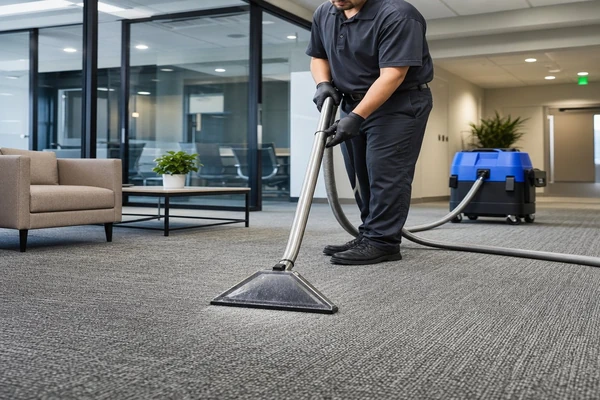
Office carpet vacuum cleaner
Coordinating Cleaning With Business Hours
Carpet-cleaning services should improve the work environment without significantly interrupting business activities. Carpet cleaning can be done by area, during non-peak hours or after-hours. A comprehensive plan should incorporate considerations for moving furniture, restricting access to the cleaning area, allowing for adequate drying time and ensuring the treated area is ready for safe use after the cleaning is completed.
Employees can prepare for the service by removing small items from the carpet and alerting the service provider to any spots that need special attention. Once the carpet has been cleaned, employees should avoid walking on the carpet until it has completely dried out to avoid recontamination. They should also be careful to avoid tracking dirt onto hard floors that remain damp.
What Determines How Often Carpets Should Be Professionally Cleaned?
Rather than being based on a standard schedule, the frequency of professional carpet cleaning should be determined by the amount of use the carpet receives. Areas such as main entrances, corridors, shared workspace, conference rooms and cafeteria/dining areas need to be cleaned more frequently than private office areas or storage areas.
Considerations for carpet cleaning frequency include:
- The amount of foot traffic and how long the area is in use
- Moisture in the climate and tracked-in dirt
- How often spills occur or food is consumed in the area
- Color, fiber content and construction of the carpet
- Standards set by the business and any contractual obligations
It is best to inspect the carpet regularly and adjust the carpet-cleaning schedule as needed to avoid significant soiling becoming visible.
Maximizing Carpet-Cleaning Effectiveness
For the best results, https://steamcommander.com/service/commercial-carpet-cleaning/ should be performed along with other preventative measures. Entrance mats collect debris before it gets to the carpet, spot cleaning prevents spots from setting in and regular vacuuming prevents excessive soiling. Spills should be blotted instead of rubbed vigorously, which can smear the spill and crush the fibers.
Pre-cleaning assessment reveals any loose seams, compromised backing, colorfastness issues, or spots needing special treatment. A technician will note these prior to cleaning, manage client expectations and spot test in an inconspicuous place prior to treating the whole carpet.
A Better Start for Business
Commercial carpet cleaning helps maintain a professional environment and preserves a valuable business asset. By working together with regular maintenance and properly scheduled professional service, you can minimize visible signs of wear, control difficult soil and keep your floors looking better for longer.











Comments