
 By
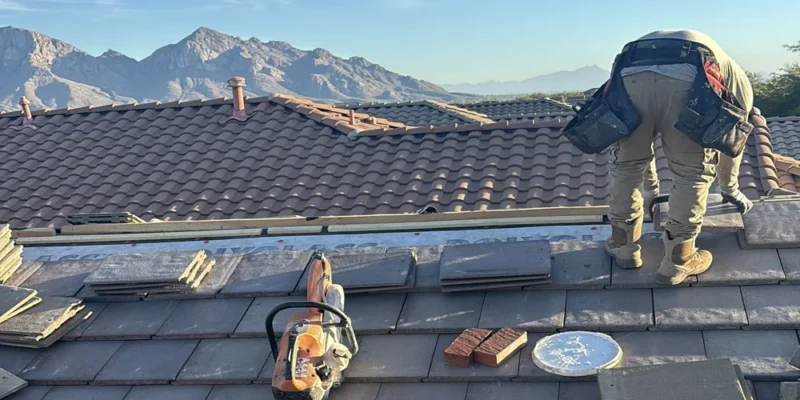
Here is a secret most roofing sales pitches leave out: plenty of roofs do not need replacing yet. Others have been limping along for years and are one monsoon storm away from an expensive interior repair. The tricky part is knowing which category yours falls into. Homeowners who start researching Tucson roof replacement often feel stuck between two bad fears, paying too much for work they do not need, or waiting too long and paying even more later.
Instead of guessing, think of this decision as a ladder. You start on the bottom rung with the smallest, cheapest fix and climb only as far as your roof actually requires. Each rung below explains what it looks like, when it makes sense, and what to ask your roofer before moving up.
Rung One: Get the Facts With a Real Inspection
Every good decision begins with information. A walk around the yard with binoculars is a start, but a proper inspection looks at what you cannot see from the ground: weak or aging areas, hidden leaks, and the spots most likely to fail in a storm. Pay attention to how the inspector behaves. A trustworthy one will show you photos or point out problems on the roof itself and explain your options, including the cheaper ones.
Reality Roofing, a Tucson company led by owner Dave Porter, builds its approach around this idea. The company offers free roof inspections and says its goal is to tell you whether you need a simple repair or a full replacement, without pressure to replace more than necessary.
Questions to ask at this stage:
- What exactly did you find, and can you show me?
- Which problems are urgent, and which can wait?
- If I only fixed the urgent items, how long could the roof reasonably last?
Rung Two: Targeted Repairs
If the damage is limited, a repair is often the smartest move. Common candidates in Tucson include cracked or slipped tiles, damaged flashing around vents and chimneys, worn sealant, small punctures, and sections of flat roof where water has started to pond.
A repair makes sense when:
- The problem is isolated to a small area
- The rest of the roof is in solid shape
- The underlayment, the water barrier under shingles or tile, is still sound
Because tile roofs hold up well in the desert sun but depend heavily on what sits beneath the tiles, a tile repair that ignores a failing underlayment is only a temporary patch. Ask your roofer to check it before promising anything.
What to ask: Is there a written warranty on the repair, and what does it cover? Reality Roofing, for example, lists a five-year workmanship warranty on qualifying repairs.
Rung Three: Coatings and Restoration
Between a repair and a full tear-off sits an option many homeowners never hear about: a roof coating. Spray-applied coatings, including cork-based products, can renew protection on certain existing roofs, seal out moisture, and reflect heat. They are commonly used on flat roofs and can also work on some tile, foam, and metal roofs.
This rung can be a great fit when the roof structure is sound but the surface has aged. It can extend your roof’s life without the cost and disruption of replacement, provided the roof underneath is in good enough condition to coat. An honest roofer will tell you when it is not.
Coatings also tie into one of Tucson’s biggest roofing topics, heat. ENERGY STAR explains that a cool roof is made of a material or coating that lowers the roof’s surface temperature, and that cool roofs work best in hot, sunny climates like the Southern U.S. According to that guidance, a clean white roof reflecting 80 percent of sunlight can stay about 50 degrees Fahrenheit cooler on a summer afternoon than a gray roof reflecting only 20 percent. A cooler roof surface can also slow wear on the roofing materials. You can read the full explanation in ENERGY STAR’s Cool Roofs guide.
What to ask: Will a coating be compatible with my roof type, and what does the manufacturer warranty cover?
Rung Four: Partial Replacement
Sometimes one section of the roof has failed while the rest is healthy. Maybe a patio addition has a different roof type, or a hail or storm event damaged one slope. Replacing just that section can be a sensible middle path.
Be aware of the limits. Matching new materials with old ones, especially older tile or discontinued shingle colors, can be difficult, and the seams between old and new roofing are potential leak points. A good contractor will discuss both the cost savings and these tradeoffs.
Rung Five: Full Replacement
At the top of the ladder, a complete replacement is the right call when the roof as a whole has reached the end of its useful life. Here are signals that point this way:
- Widespread leaks in several areas, not just one stubborn spot
- Repeated repairs that keep costing money without solving the problem
- Failing underlayment across large sections, especially on tile roofs
- Brittle, curling, cracking, or bare shingles with heavy granule loss
- Sagging or soft decking that suggests moisture has reached the structure
- Age that has outrun the material’s expected lifespan
When replacement is the answer, that is also your chance to choose the best material for desert conditions. Reality Roofing installs asphalt shingle, tile, metal, and flat roofing systems for homes and commercial buildings, including TPO and modified bitumen for low-slope roofs. Each has tradeoffs in cost, appearance, lifespan, and heat performance, so ask for side-by-side options rather than a single quote.
A Quick Comparison of Your Options
| Option | Best for | Main tradeoff |
|---|---|---|
| Repair | Isolated damage on a sound roof | Does not fix underlying aging |
| Coating | Sound roof with a worn surface | Only works if the roof beneath is healthy |
| Partial replacement | One damaged or failed section | Matching materials and seams |
| Full replacement | Widespread failure or end of life | Highest upfront cost |
How to Compare Bids Without Getting Lost
Whichever rung you land on, get more than one opinion and compare apples to apples. Look for a written scope that names the materials, underlayment, flashing, and cleanup. Confirm the contractor is licensed, insured, and bonded in Arizona, and ask about workmanship warranties and what they exclude. Reality Roofing’s license is a KB-1 general contractor license (ROC No. 359093), which you can verify with the Arizona Registrar of Contractors. Make sure payment terms are clear in writing, and ask when your build date would be confirmed. The company promises a confirmed date within 48 hours of signing.
Timing Matters in the Desert
Roof trouble tends to reveal itself during storms, which is the worst time to find a roofer. Scheduling an inspection during calm weather gives you time to compare quotes, plan repairs, and schedule work before the next monsoon season. Even a modest repair done early can prevent water from soaking insulation, ceilings, and drywall.
Start With a Straight Answer
If you are not sure which rung your roof belongs on, the best first step is a free, no-pressure inspection. Call Reality Roofing at (520) 304-9020 to schedule one, and ask them to explain what they find in plain language. The goal is simple: spend what your roof actually needs, no more and no less.





Comments